
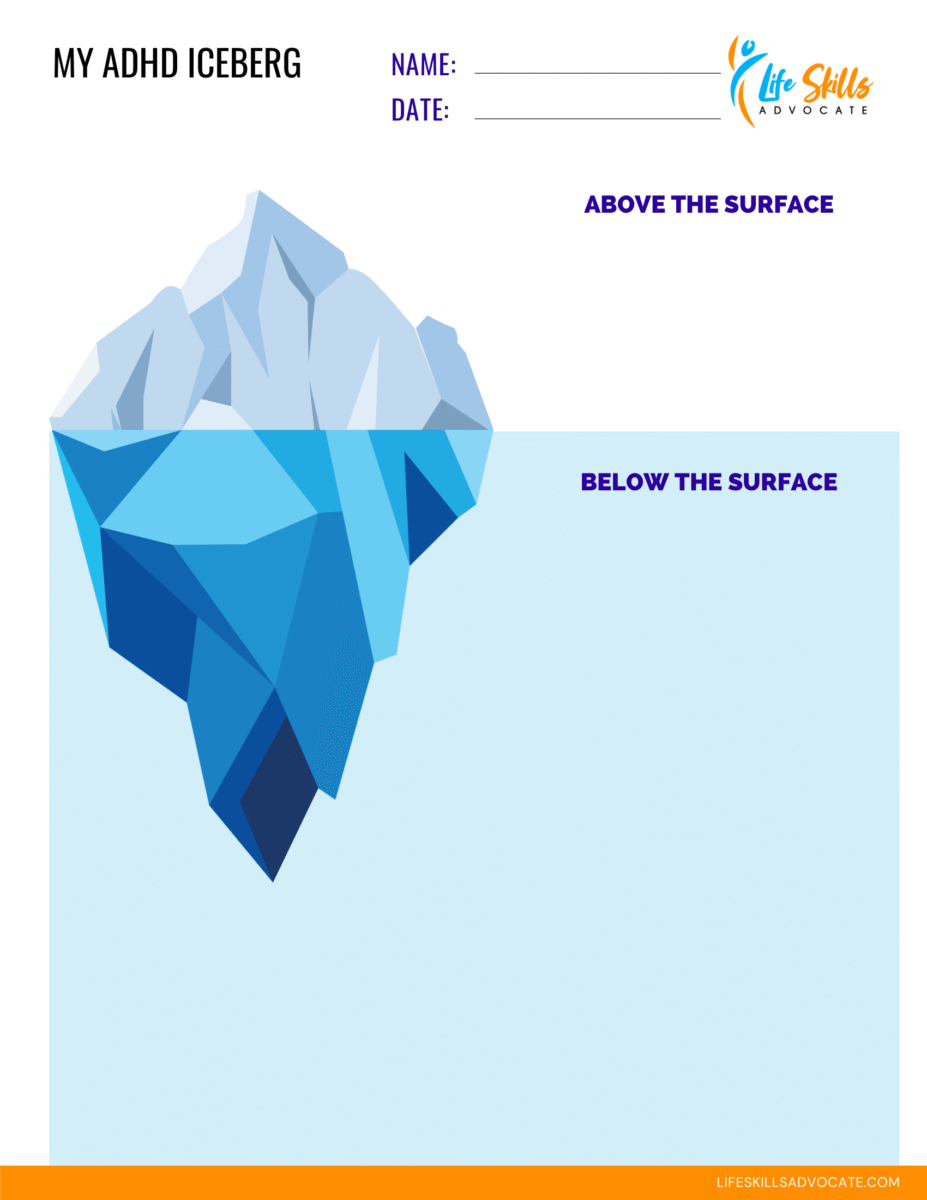
Get the Free ADHD Iceberg to Capture what is seen and unseen about ADHD to choose 1 to 2 next focus areas
A simple visual to map what others see and what you carry quietly so conversations and next steps feel clearer for teens, parents, and educators
What's Included?
What Can You Do With the Free ADHD Iceberg?
Make Invisible Challenges Visible
with a clear above and below the surface layout that supports working memory and self-monitoring
Start Better Conversations About ADHD
by giving a shared language for what people notice and what is harder to see
Pick A Realistic Next Step
so you can choose 1 or 2 priority areas without overwhelm
Get Your Free ADHD Iceberg
Get the Full Resource Library in Advocate360

Create a free account to keep the full resource library in one place, re-download anytime, and adapt worksheets specifically to your needs.
FAQs
Print it, list visible signs above the surface, list less obvious challenges below, then pick 1–2 areas to focus on next.
No. The examples mention teens, but adults, parents, and educators can adapt it easily.
Yes. It works for small groups or one-to-one reflection; credit the original concept as noted in the background.
No. A printed copy and a writing utensil are enough.
No. It prompts you to select focus areas; goal setting can follow with support from a coach, parent, or educator.
Related Resources
Who Created This Resource
We build simple, low-friction executive function tools shaped by lived neurodivergent experience and professional training, so you get clear steps that fit real life.
CHRIS HANSON // Founder of Life Skills Advocate
Hi, I’m Chris. I grew up in Cleveland, Ohio and moved to the Seattle area in 2008. I am a neurodivergent adult and a former special education teacher. In 2019 I started Life Skills Advocate to create the kind of practical support I wished I had in high school and early adulthood.
I have about eight years of classroom experience and more than twenty years of lived experience with ADHD and anxiety. My work focuses on simple systems that reduce overwhelm at school, work, and home. I care about clear steps, realistic follow through, and tools that fit real life.
Outside of work I enjoy time with my wife and son, gardening, and racquetball. I am grateful for the community that uses our resources and shares feedback so we can keep improving together.
Chris
AMY SIPPL // Content Specialist
Hi, I’m Amy, a Minnesota-based content specialist at Life Skills Advocate and a Board Certified Behavior Analyst (BCBA). I support families, educators, and adults with resources that make learning and daily routines easier.
I hold a master’s degree in Applied Behavior Analysis from St. Cloud State University and undergraduate degrees in Psychology and Family Social Science from the University of Minnesota. For over a decade I have worked with neurodivergent children, teens, and adults in home, school, and clinic settings.
My writing centers on practical strategies that respect autonomy and reduce overwhelm. I aim for clear explanations, doable next steps, and tools that help people use their strengths in everyday life.
Amy